Composting is a whole inspiring and sobering process

The way November hits my body, mind and spirit is incomparable with other months. It’s a month that asks me to pivot, reassess what’s really true to my heart, excavate and decompose. No matter where I am in life, November schools me like an austere, severe and sobering teacher. My life circumstances have changed drastically almost every other year for more than 12 years now and every November feels the same: I’m asked to let go and to stay with the discomfort of not knowing what there will be on the other side of that shedding.
This month feels like it is not here to provide support or comfort, it’s here to invite revaluation and surrender.
I know, it sounds heavy but I look outside and I notice that I’m in good company: trees are letting go of their beautiful foliage, birds are migrating to warmer places, animals are working hard to find more calories to prepare for the winter, plants are bringing their energy down to the roots and insects are giving their body back to the earth. It seems that everything around me is whispering: “don’t worry, it’s ok, you can let go, you can break down what is heaving you”.
And this is the best month for me to practice Trust. Trust that I’ll make it up from the underworld of shedding.
There’s this myth I’ve read that embodies November’s energy for me: the Descent of Inanna.
Inanna was the ancient Sumerian goddess of love, power and fertility.
″Inanna is a queen, married and living a life full of abundance and beauty. She has a sister, Ereshkigal, who lives in the Underworld of darkness.
Ereshkigal’s husband just died and so Inanna decides to go and visit her in the Underworld.
Right before embarking on her journey, she instructs her faithful companion Ninshubur to come looking for her should she remain away for more than three days.
Dressed in her royal clothes and jewelry, she starts her journey of descent. To reach her sister she has to pass through seven gates and let go of something she’s wearing: first her crown, then her rings, her bracelets, her necklaces, her garment, her shoes and her underwear. Everything that defines her identity and power is being stripped away.
When she finally arrives and faces her sister, the dark goddess kills her and hangs her body on a hook to rot.
When Inanna fails to return from the underworld, her faithful servant, Ninshubur, sets out to plead with various deities for her rescue. While most refuse to intervene, the god of wisdom, moved, relents and dispatches two companions to help bring Inanna back.
Driven by their core gift of empathy, the two creatures enter the underworld to share in the dark queen's sorrow. By truly listening, they bear witness to her pain and mourn alongside her, intimately feeling the heavy grief that weighs on her heart.
Relieved, Ereshkigal asks what they want in return for their comforting presence. They ask for Inanna's lifeless body to be returned to the land of the living. With her permission secured, they breathe life back into Inanna and successfully resurrect her.
Innana is living again, transformed, empowered by the light and the shadow she experienced and fully integrated.
Yet, Inanna knows the strict rule of the underworld: no one leaves without providing a living substitute.
Returning home, Inanna discovers her husband celebrating rather than mourning her death. She finds him sitting on her very throne, completely indifferent to her absence.
Disillusioned, she decides to give her husband to the queen of Darkness.
He then will find a way to share his time in the underworld with his sister, spending half of the year in the Underworld and the other half on the Earth.″
This story seems quite harsh and macabre but, like any mythology, it is full of symbolism and, in my opinion, it’s quite empowering.
Every character represents aspects of our own personality, needs and desires. There are many interpretations of this mythology and for me it’s a metaphor with one big meaning: down is the only way through and nature never fails to show me that trusting, surrendering and decomposing are a vital part of her cycles.
Inanna represent joy, pleasure, fortune, abundance and gratitude. These states and feelings are not possible to be fully experienced if we don't allow the grief, the internal and external conflicts, the rage, the saddness, the pain we also encounter in our life to be experienced, seen and given space tenderly and without judgment. This process of integrating and giving space to the muddy feelings, requires us to be naked, to release for a while our identities and our ideas of who we are and who we don't want to identify with. Embracing the complexity of all that is moving us, no matter how positive or negative, is what makes us whole.
James Hillman, an American psychologist, emphasized how our culture urges us to stay positive, to always trying to skip past the darkness and jump straight into the light, escaping low feelings.
Hillman considered depression, breakdown, failure, disillusion and darkness not just problems to be solved but necessary stages of transformation.
I agree and I constantly notice how the natural world periodically goes through the alchemical cycles where breaking down of matter, letting things decompose is a necessary stage to create a fertile soil for life to sprout.
There is always going to be a time when we just need to surrender and trust and, for me, November is that time.
∴
But what does it mean to actually surrender, let go, allow the decomposition to happen?
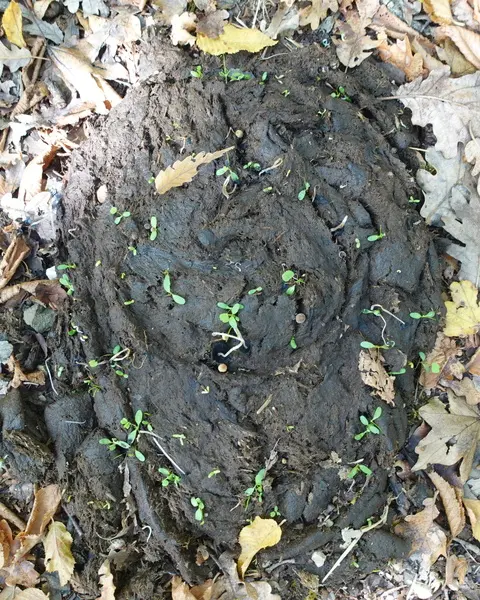
Last year, in the middle of November, we made compost for the garden. It was such a long process and I don’t know if it truly worked but I used the decomposed ingredients in my garden a few months after we mixed them together.
I use composting for the garden as a metaphor for this metamorphosis I'm going through, so let me upack it.
A successful compost recipe relies on balancing carbon-rich "browns" with nitrogen-rich "greens," adding water, and introducing air.
Garden compost recipe:
- ½ of nitrogen ingredients: such as food leftovers, pee and poo, dead creatures;
- 1 part carbon-rich browns: any wooden material chipped down, woodchips and woody stalks.
- ½ part freshly cut grass
I can clearly see how each element represents something in my life and so here’s the translated recipe for decomposing what no longer works or serves.
Self-metamorphosis recipe:
- 1/2 of nitrogen ingredients: These are all of the bold behaviours that hurted me and those I care about. The rude comment that caught me off-guard and I cannot stop thinking about, my addiction to keep consuming what actually hurts me more than soothes me, my way of defending behaviours that are clearly not rooted in the truth of what my heart feels. People-pleasing and abandoning myself for the sake of making others feel good. All the murky stuff I’m not proud of.
We just need a small portion of that in the entire recipe, I don’t have to let go of all the shit I have but a part of it needs to be decomposed. Once and for all. - 1 part carbon-rich brown: the woody materials of my life are those thoughts and daily habits that make me stuck, they’re not necessarily hurtful or deeply damaging but are definitely creating rigidity and friction.
When I don’t change my mind even if I’m encountering better evidence of what I think; when I stay loyal to conflict distrusting others and myself because in the past I was hurt; when I dwell in the need to be right and defend myself even though that righteousness is not serving my heart and the truth of the situation. The control-freak parts of me that probably once built safety but now are just blocking the joy and pleasures my body wants to feel. The need to lead and be in control because I don’t trust others will manage on their own. Again, I don’t need to give it all, just a good part has to go in the mix. - ½ part freshly cut grass:
This portion of the recipe represents the expectations and results I envision in my relationships, projects and creative endeavours. The expectations I have when I work hard on something I love or when I give something from my heart. Willingly or unwillingly, I have expectations, assumptions, desires that things will turn out a certain way, goals I want to achieve. For me it can be quite fun to imagine how the results of my work look and feel, yet, sometimes, there's more control than trust. So I'm going to put int the compost mix some expectations on how some projects will work out and just let them be.
The composting process doesn’t require only the ingredients, it requires time, air, water and most of all trust. Trust that all the organisms and bacterias will work their way to transform all that we offered into a fertile humus.
November is a really good time for composting.