
Composting is a whole inspiring and sobering process

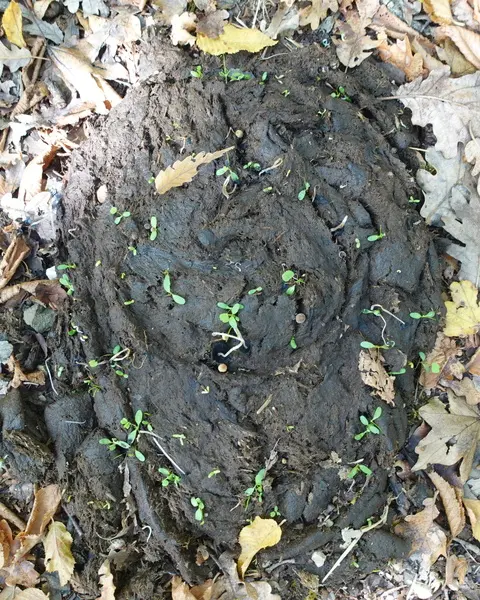
The way November hits my body, mind and spirit is incomparable with other months. It’s a month that asks me to pivot, reassess what’s really true to my heart, excavate and decompose. No matter where I am in life, November schools me like an austere, severe and sobering parent. My life circumstances have changed drastically almost every other year for over eleven years now and every November feels the same: I’m asked to let go and to stay with the discomfort of not knowing what there will be on the other side of that shedding.
This month feels like it is not here to provide support or comfort, it’s here to invite revaluation and surrender.
I know, it sounds heavy but I look outside and I notice that I’m in good company: trees are letting go of their beautiful foliage, birds are migrating to warmer places, animals are working hard to find more calories to prepare for the winter, plants are bringing their energy down to the roots and insects are giving their body back to the earth. It seems that everything around me is whispering: “don’t worry, it’s ok, you can let go, you can break down what is heaving you, you’re welcome to be naked”
Damn, I don’t like to be so barren, but I also know that I need to.
This month is harsh and it’s the best month for me to practice Trust. Trust that I’ll make it up from the underworld of shedding.
There’s this myth I’ve read that embodies November’s energy for me: the Descent of Inanna.
Inanna was the ancient Sumerian goddess of love, power and fertility.
″Inanna is a queen, married and living a life full of abundance and beauty. She has a sister, Ereshkigal, who lives in the underworld of darkness and unknownness.
Ereshkigal’s husband dies and so Inanna decides to go and visit her in the Underworld.
She dresses in royal clothes and jewelry and before she begins her journey, she asks her faithful servant, Ninshubar, to come and look for her if she would not return back to her reign after three days.
She so starts her journey of descent. To arrive to her sister she has to pass through seven gates and let go of something she’s wearing: first her crown, her rings, her bracelets, her earrings, her garment, her shoes and her underwear. Everything that defines her identity and power is being stripped away. And when she finally arrives and faces her sister, the dark goddess kills her and hangs her body on a hook to rot.
The loyal servant Ninshubar, not seeing Inanna returning, decides to go and ask different gods to help her to bring back Inanna from the underworld. Many gods are not willing to help her but the god of wisdom, softened, decides to send two allies to help Innana.
The two creatures have one main skill: empathy. When they arrive in the underworld, they deeply listen and mourn with the queen of darkness, feeling the grief that burdened her heart.
Relieved, Ereshkigal asked what they desired in exchange for their compassion and presence. Without hesitation, they request the release of Inanna’s corpse to the realm of the living. Granted their wish, they successfully restore Inanna to life.
Innana is back to the world of the living, transformed, empowered by the light and the shadow she experienced and fully integrated.
Although Inanna’s is living again, she knows that no human can come back from the underworld without replacing their presence with another living being.
On her return, Innana discovers that her husband is celebrating her absence, sitting at her throne, not grieving her.
Disillusioned, she decides to give her husband to the queen of Darkness. He then will find a way to share his time in the underworld with his sister, spending half of the year in the Underworld and the other half on the Earth.″
This story seems quite harsh and macabre but, like any mythology, it is full of symbolism and, in my opinion, it’s quite empowering.
Every character represents aspects of our own personality, needs and desires. There are many interpretations of this mythology and for me it’s a metaphor with one big meaning: down is the only way through and nature always shows me that surrendering, decomposing is a vital part of her cycles.
James Hillman, an American psychologist, emphasized how our culture urges us to stay positive, look on the bright side, trying to skip past the darkness and jump straight into the light, escaping low feelings.
Hillman considered depression, breakdown, failure, disillusion and darkness not just problems to be solved but necessary stages of transformation.
I agree and I constantly notice how the natural world we’re born into, constantly goes through the alchemical cycles where the breaking down of matter, letting things decompose are necessary stages to create a fertile soil for life to sprout.
Everything false must burn and decompose before we can see what’s true.
There is always going to be a time when we just need to surrender and trust and, for me, November is that time.
But what does it mean to actually surrender, let go, allow the decomposition to happen?
Last year, in the middle of November, we made compost for the garden. It was such a long process and I don’t know if it truly worked but I used the decomposed ingredients in my garden a few months after we mixed them together.
I’m going to write down a list that is kinda like a recipe for compost. I suppose I’m going to use it for myself because I’m very humbled by composting. Feel free to take what you need and leave what feels irrelevant for you.
A successful compost recipe relies on balancing carbon-rich "browns" with nitrogen-rich "greens," adding water, and introducing air.
Garden compost recipe:
- ½ of nitrogen ingredients: such as food leftovers, pee and poo, dead creatures;
- 1 part carbon-rich browns: any wooden material chipped down, woodchips and woody stalks.
- ½ part freshly cut grass
As I write this simplified recipe for compost I can clearly see how each element represents something in my life and so here’s the translated recipe for decomposing what no longer works or serves.
Life compost recipe:
- 1/2 part of nitrogen ingredients: These are all of the bold behaviours that hurted me and those I care about. The rude comment that caught me off-guard and I cannot stop thinking about, my addiction to keep consuming what actually hurts me more than soothes me, my way of defending behaviours that are clearly not rooted in the truth of what my heart feels. People-pleasing and abandoning myself for the sake of making others feel good. All the murky stuff I’m not proud of.
We just need a small portion of that in the entire recipe, I don’t have to let go of all the shit I have but a part of it needs to be decomposed. Once and for all. - 1 part carbon-rich brown: the woody materials of my life are those thoughts and daily habits that make me stuck, they’re not necessarily hurtful or deeply damaging but are definitely creating rigidity and friction.
When I don’t change my mind even if I’m encountering better evidence of what I think; when I stay loyal to conflict distrusting others and myself because in the past I was hurt; when I dwell in the need to be right and defend myself even though that righteousness is not serving my heart and the truth of the situation. The control-freak parts of me that probably once built safety but now are just blocking the joy and pleasures my body wants to feel. The need to lead and be in control because I don’t trust others will manage on their own. Again, I don’t need to give it all, just a good part has to go in the mix. - ½ part freshly cut grass:
This portion of the recipe represents the expectations and results I envision around my projects and creative endeavours and act of kindness. The expectations I have when I work hard on something I love or when I give something from my heart. Willingly or unwillingly, I have expectations, assumptions, desires that things will turn out a certain way, goals I want to achieve. For me it can be quite fun to imagine how the results of my work look and feel, yet I need to put in the compost mix some expectations on how some projects will work out and just let them be.
Now, the composting process doesn’t require only the ingredients, it requires time, air, water and most of all trust. Trust that all the organisms and bacterias will work their way to transform all that we place into the pile into a fertile humus to then plant new seeds and let new life sprout.
November is a really good time for composting.